
Best Montessori Science and Discovery Gifts
Science begins with close observation, useful questions and ideas a child can test. These picks cover living things, real-world facts, moving systems and screen-free coding without turning discovery into a pile of disconnected experiments.
Our quick picks
Each pick serves a different shopping need.
Five gifts for questions, nature study, physical systems and screen-free computational thinking.
Best overall: National Geographic Little Kids First Big Book of Why. A photographic book that begins with the real questions young children ask. Best value: My Encyclopedia of Very Important Things. A broad first encyclopedia with 224 pages of facts, photographs and illustrations.
Affiliate disclosureAs an Amazon Associate I earn from qualifying purchases. The merchant sets the current price and availability on each product page.

National Geographic Little Kids First Big Book of Why
A photographic book that begins with the real questions young children ask.
Check price on Amazon
My Encyclopedia of Very Important Things
A broad first encyclopedia with 224 pages of facts, photographs and illustrations.
Check price on Amazon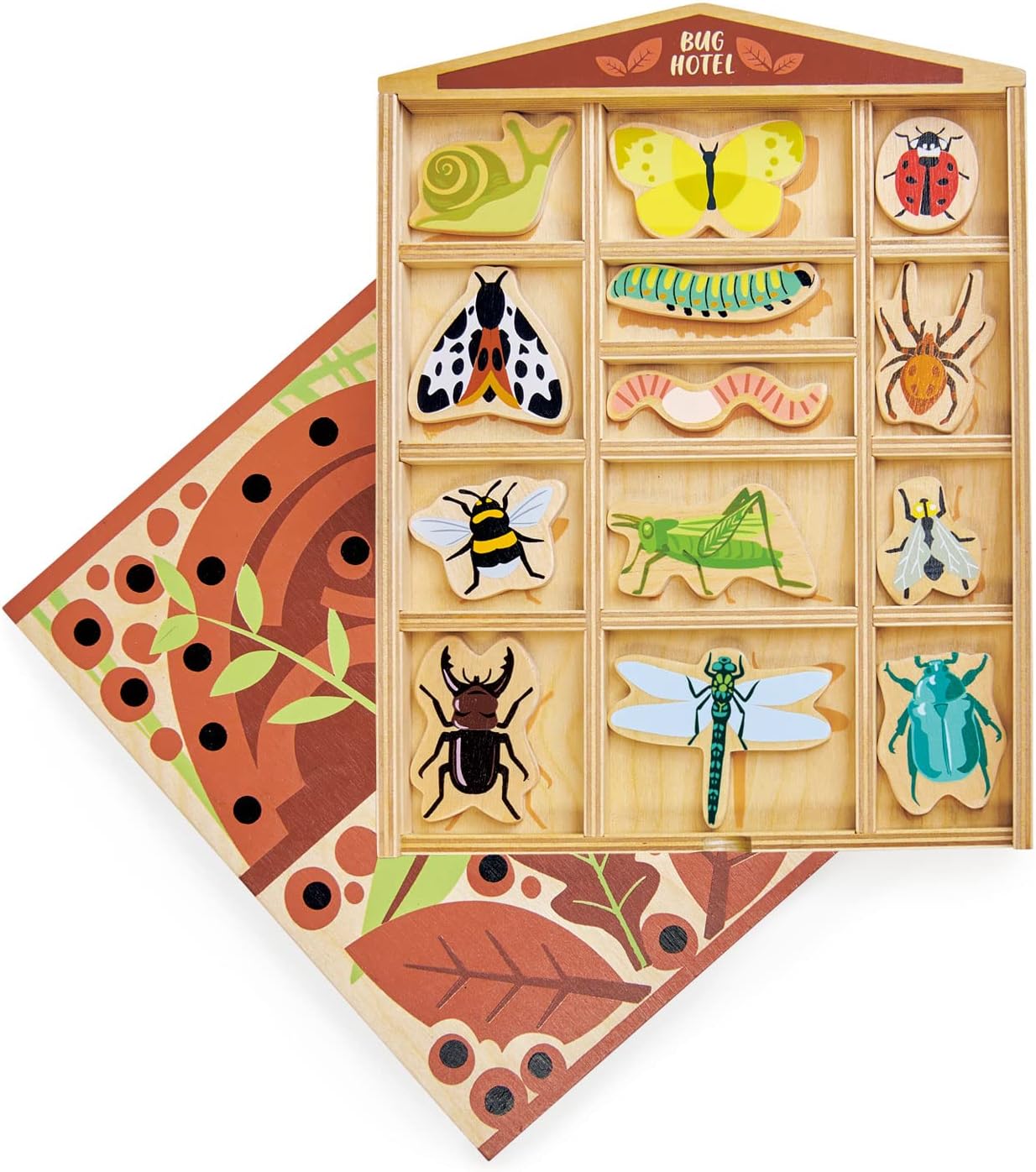
Tender Leaf Toys Bug Hotel
A wooden matching collection built around 13 familiar garden creatures.
Check price on Amazon
Hape Quadrilla Race to Finish
A wooden marble run that turns a construction idea into a moving test.
Check price on Amazon
Learning Resources Botley 2.0 Coding Robot Activity Set
A coding robot that makes instructions and route errors visible without a screen.
Check price on AmazonCompare the shortlist
| Our pick | Best for | Age | Price | Materials |
|---|---|---|---|---|
| Best OverallNational Geographic Little Kids First Big Book of Why | Science and discovery, Language | 3 yr–6 yr | Under $25 | See product |
| Best ValueMy Encyclopedia of Very Important Things | Science and discovery, Language | 3 yr–6 yr | Under $25 | See product |
| Best Nature StudyTender Leaf Toys Bug Hotel | Sorting toys, Montessori toys | 3 yr+ | $25–50 | Wood, Water-based finish |
| Best Build-and-Test GiftHape Quadrilla Race to Finish | Montessori toys, Science and discovery | 4 yr+ | $25–50 | Wood, Water-based finish |
| Best for Older ChildrenLearning Resources Botley 2.0 Coding Robot Activity Set | Vehicles, Science and discovery | 5 yr–10 yr | $50–100 | ABS plastic |
The details and trade-offs
As an Amazon Associate I earn from qualifying purchases.
National Geographic Little Kids First Big Book of Why
A photographic book that begins with the real questions young children ask.
The question-and-answer format covers animals, people, nature and everyday phenomena across 128 pages. It gives an adult clear material for a short explanation while inviting the child to look closely, ask a follow-up and return to a new subject later.
- The question format creates natural openings for conversation
- Photographs connect the information to recognizable people, animals and places
- Broad subjects make the book useful for repeated browsing
- The book is dense and broad rather than sequential, so most preschoolers need an adult reader.
My Encyclopedia of Very Important Things
A broad first encyclopedia with 224 pages of facts, photographs and illustrations.
People, animals, places and ideas share one browsable reference book in the lowest price band. Its short entries let a child follow a current interest without requiring the family to buy a separate book for every question.
- The wide subject range lets a child follow current interests
- Photographs and short entries support browsing before independent reading
- The 224-page format offers more longevity than a single-topic picture book
- The large book is heavy and visually dense, and it is not designed for independent beginning readers.
Tender Leaf Toys Bug Hotel
A wooden matching collection built around 13 familiar garden creatures.
Labeled silhouettes ask the child to compare and classify each animal before storing it in the display shelf. The set can introduce names and observations that later carry into a real garden walk or nature book.
- Thirteen recognizable creatures support naming and comparison
- Shelf silhouettes create a clear matching and restoration activity
- Names printed underneath extend the set into early language work
- It represents nature rather than replacing real observation, and its matching shelf is less open-ended than loose figures.
Hape Quadrilla Race to Finish
A wooden marble run that turns a construction idea into a moving test.
The child combines blocks and tracks, releases a marble and sees whether the planned route works. Rebuilding after a stop or wrong turn makes testing and revision part of the activity rather than an adult explanation.
- Children can alter a build and immediately observe how the marble path changes
- Multiple layouts support planning beyond a single finished model
- The set works well as a shared building project
- The small marbles require careful storage and supervision, and unstable builds can frustrate a new four-year-old.
Learning Resources Botley 2.0 Coding Robot Activity Set
A coding robot that makes instructions and route errors visible without a screen.
Command cards and a remote programmer let a child plan a sequence, then watch Botley attempt it around obstacles. Angled turns and object detection extend the challenge for children ready to revise a multi-step route.
- A separate remote keeps coding play away from a phone or tablet
- Command cards make sequences visible before the robot moves
- Object detection, angled turns and obstacles support progressively longer routes
- The set is expensive, battery-powered and more stimulating than a traditional Montessori material, and its 78 pieces need organized storage.
Before you choose
What makes a good first science gift?
Start with something the child can observe directly and return to often. A factual book, a nature matching activity or a simple build-and-test system can all support careful questions.
Does a science gift need experiments?
No. Classification, factual reading, construction and coding all ask a child to notice patterns, make a prediction or revise an idea. The best format depends on how the child likes to work.